




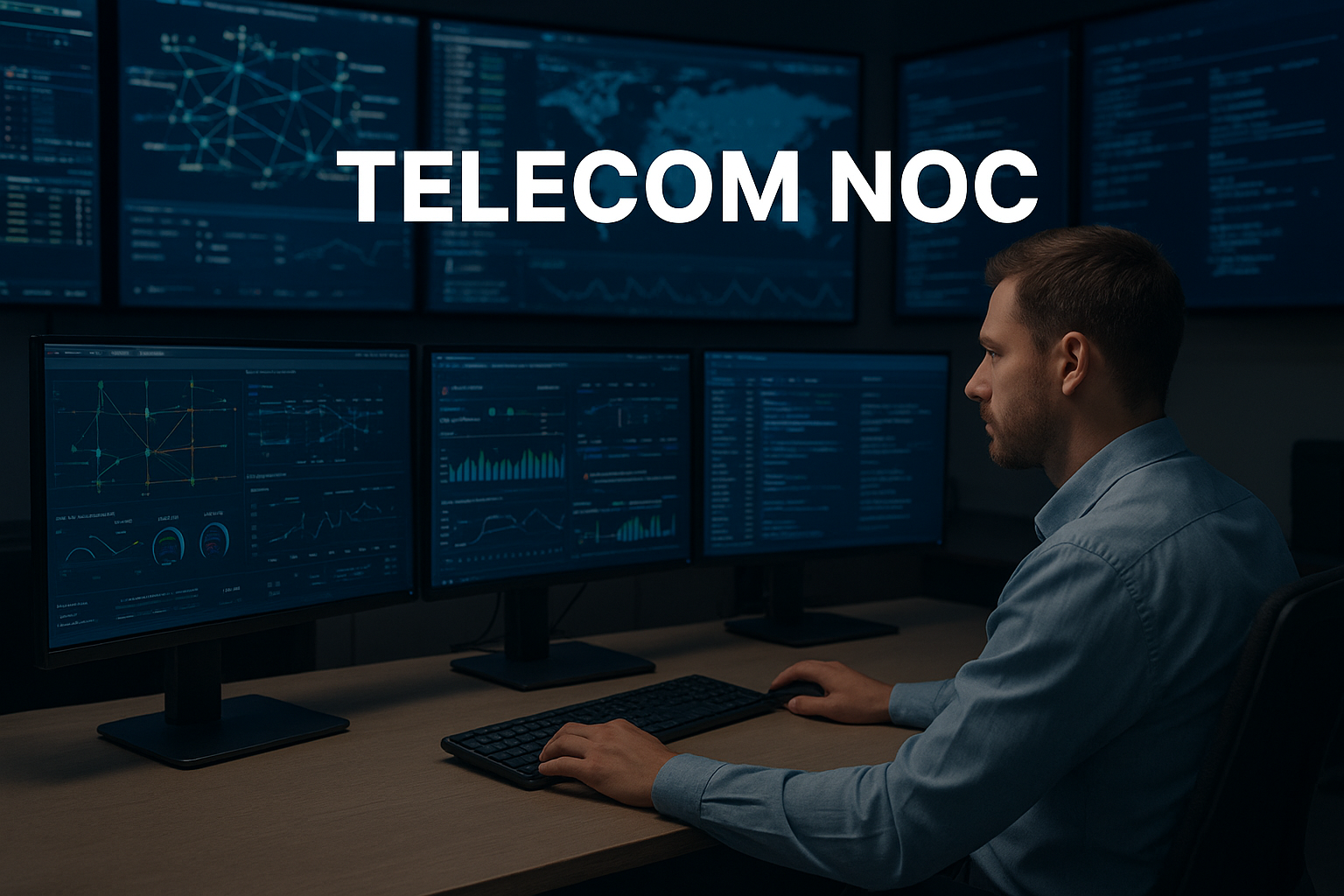
What is a Telecom NOC?
A Telecom NOC (Network Operations Centre) is a centralized hub where telecommunications companies monitor, manage, and maintain their network infrastructure. The NOC ensures continuous, reliable, and secure voice, data, mobile, and internet services.
Unlike standard IT monitoring centers, a telecom NOC focuses on network monitoring, performance optimization, and SLA compliance for enterprise and consumer clients.
Key Responsibilities of a Telecom NOC
A Telecom NOC acts as the nerve center of telecom operations. Its primary duties include:
1. Monitoring Network Performance
- Continuous real-time monitoring of switches, routers, fiber-optic networks, cell towers, and transmission links.
- Early detection of performance issues, including latency, bandwidth congestion, and packet loss.
- Use of NMS (Network Management Systems) for proactive network alerts.
2. Detecting and Troubleshooting Outages
- Rapid identification of network faults, alarms, and service degradation.
- Performing root cause analysis (RCA) to minimize downtime.
- Reducing SLA breaches with efficient incident management.
3. Coordinating Field Technicians
- Dispatching network technicians and engineers to repair physical infrastructure issues.
- Managing maintenance schedules to reduce service disruption.
- Using workflow tools for efficient resource allocation.
4. Managing Network Traffic
- Optimizing bandwidth, latency, and capacity.
- Implementing traffic balancing and routing to prevent congestion.
- Ensuring quality of service (QoS) for high-demand applications.
5. Ensuring Network Security
- Detecting cyber threats, suspicious activity, and unauthorized access.
- Monitoring firewalls, intrusion detection systems (IDS), and security policies.
- Protecting sensitive telecom data and infrastructure.
6. Maintaining Service Availability
- Ensuring uptime and network reliability per SLA commitments.
- Managing redundancy, failover systems, and disaster recovery mechanisms.
- Providing 24/7 network monitoring and reporting.
Who Works in a Telecom NOC
A NOC is powered by skilled professionals, including:
- NOC Engineers – Monitor, troubleshoot, and resolve network issues.
- Network Technicians – Maintain hardware and on-site infrastructure.
- Incident Managers – Coordinate incident response and escalation.
- Transmission/Transport Network Engineers – Manage fiber optic links, microwave systems, and backhaul networks.
- IP/Core Network Engineers – Ensure routing, switching, and core network stability.
Main Processes in a Telecom NOC
Telecom NOCs follow ITIL-aligned processes to manage operations efficiently:
- Incident Management – Logging and resolving network faults quickly.
- Change Management – Implementing upgrades and network changes with minimal impact.
- Problem Management – Addressing recurring issues to prevent future outages.
- Service Request Management – Handling client requests for network services.
- Event Management – Monitoring alarms and network events proactively.
- Knowledge Management – Documenting solutions, best practices, and SOPs.
Key Network Elements in a Telecom NOC
A professional NOC relies on three core elements:
- IT or Service Management Platform: Tools like NMS, OSS, or ticketing systems.
- Standardized Processes: ITIL-driven workflows for efficient network management.
- Skilled Personnel: Engineers and technicians trained to monitor and maintain network health.
Why Telecom NOCs are Critical
Without a NOC:
- Network outages would take longer to resolve.
- Traffic and bandwidth would be inefficiently managed.
- Cyber threats could compromise data and service continuity.
- SLAs could be violated, leading to customer dissatisfaction.
A Telecom NOC ensures continuous, secure, and optimized network performance, supporting millions of users globally.
Conclusion
A Telecom NOC (Network Operations Centre) is the backbone of telecom operations. Through real-time monitoring, outage detection, traffic management, and security enforcement, it guarantees high uptime, reliable service, and optimized performance. By integrating skilled personnel, IT platforms, and ITIL-driven processes, telecom operators can deliver world-class communication services around the clock.
Leave a Reply